Tomb of Nimrod discovered ISTANBUL Ongoing excavations and research at Nimrud Mountain in Bitlis have revealed the history behind the tomb and treasures of King Nimrod. The real venue of the tomb, which was constructed 2,000 years ago, has been determined. Writer and researcher Mehmet Törehan Serdar said his team has determined the location of the tomb after an extensive period of research. Noting that the mountain in Adiyaman has no relation to the mountain in Bitlis, Serdar said, “This is only a resemblance in name. The reason being, there is another kin of Adiyaman’s Nimrod in Nemrut.”King Nimrod, according to the Book of Genesis and the Books of Chronicles, was the son of Cush and great-grandson of Noah, and the King of Shinar. He is depicted in the Tanakh as a man of power on earth and a mighty hunter. Extra-biblical traditions associating him with the Tower of Babel led to his reputation as a king who rebelled against God. Several Mesopotamian ruins were given Nimrod’...
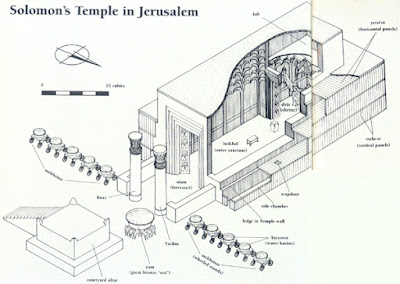
The Doorways of Solomon’s Temple King Solomon’s Temple was resplendent. Described in 1 Kings 6–7, the temple was divided into three parts: the forecourt (ulam), the outer sanctum (heikhal) and the inner shrine (devir), also known as the Holy of Holies. Built of stone and roofed with wooden beams, Solomon’s Temple was intricately ornamented. Its interior walls and floors were lined with wooden boards and covered in gold. It took seven years to complete the temple and its furnishings. Despite the Biblical description and archaeological parallels, there are still some mysteries about Solomon’s Temple. For example, 1 Kings 6:31 describes the doors between the outer sanctum and the inner shrine of Solomon’s Temple as having five mezuzot (the plural form of mezuzah). What is a mezuzah? In the Bible, mezuzah is normally translated as “doorpost.” However, in the context of Solomon’s Temple, doors with five doorposts do not make sense. Madeleine Mumcuoglu and Yosef G...
King Solomon’s Temple was resplendent. Described in 1 Kings 6–7, the temple was divided into three parts: the forecourt (ulam), the outer sanctum (heikhal) and the inner shrine (devir), also known as the Holy of Holies. Built of stone and roofed with wooden beams, Solomon’s Temple was intricately ornamented. Its interior walls and floors were lined with wooden boards and covered in gold. It took seven years to complete the temple and its furni shings. Despite the Biblical description and archaeological parallels, there are still some mysteries about Solomon’s Temple. For example, 1 Kings 6:31 describes the doors between the outer sanctum and the inner shrine of Solomon’s Temple as having five mezuzot (the plural form of mezuzah). What is a mezuzah? In the Bible, mezuzah is normally translated as “doorpost.” However, in the context of Solomon’s Temple, doors with five doorposts do not make sense. Madeleine Mumcuoglu and Yosef Garfinkel explore this enigma in “The P...


Comments
Post a Comment